
How Accurate is CIMT as a Predictive Tool for Heart Attack or Stroke?
Introduction
Cardiovascular disease remains the leading cause of death worldwide, with heart attacks and strokes claiming millions of lives annually. The challenge with cardiovascular conditions is that they often present suddenly and spontaneously with very few if any warnings. They often develop silently over time. Nearly half those who experience a clinical event had no traditional signs or symptoms before their actual heart attack or stroke. Traditional risk assessments like cholesterol tests and blood pressure readings provide useful insights, but they often fail to detect early-stage atherosclerosis.
CardioRisk’s Intima-Media Thickness (CIMT) testing has emerged as one of the most effective, non-invasive diagnostic tools for assessing cardiovascular risk. By measuring the thickness of the carotid and/or femoral artery walls, CIMT can detect early arterial changes that indicate a heightened risk for heart attack and stroke. But how accurate is CIMT as a predictive tool? Let's explore the science behind CIMT and its role in cardiovascular prevention.
Understanding CIMT and Its Role in Cardiovascular Health
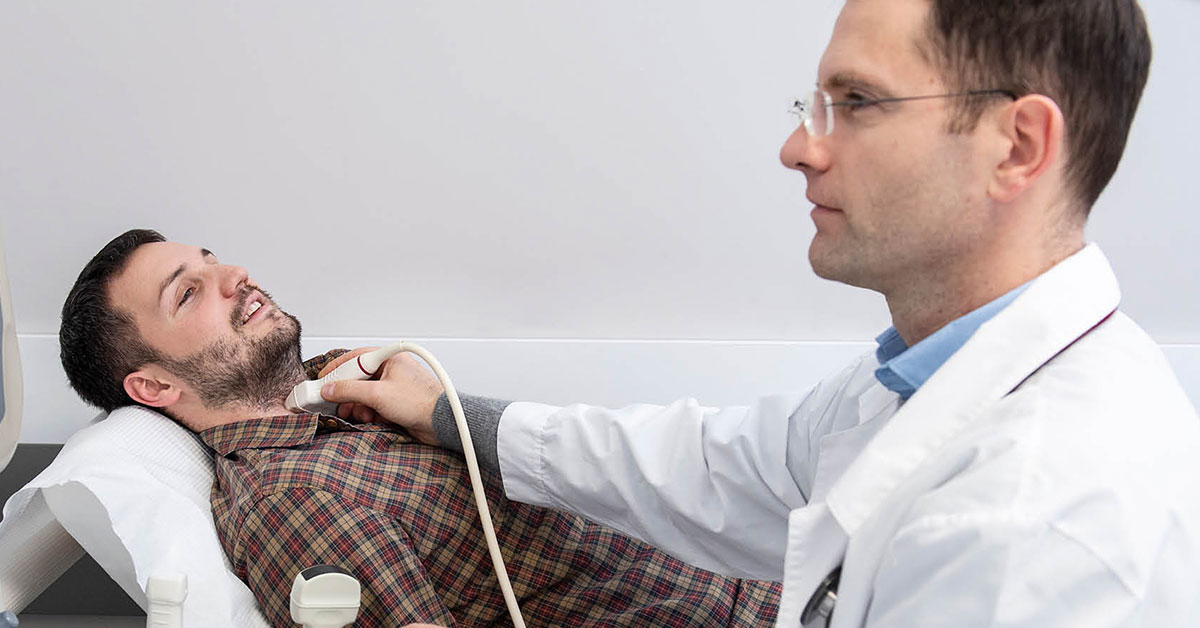
CIMT is an ultrasound-based technique that measures the thickness of the intima and media layers of the arteries. These measurements serve as a direct indicator of arterial health, helping clinicians evaluate an individual's risk for cardiovascular events.
Unlike other heart health assessments, CIMT does not just look at symptoms or existing conditions; it examines the underlying structural changes in the arteries, making it a more reliable predictor of future heart disease.
How CIMT Predicts Heart Attacks and Strokes
Numerous studies have confirmed the predictive accuracy of CIMT in identifying individuals at high risk of cardiovascular events. Here’s how it works:
- Detects Early Atherosclerosis: CIMT can detect thickening in artery walls long before plaques develop, allowing for early intervention.
- Correlates with Cardiovascular Risk: Studies show that an increase in CIMT measurement and especially plaque formation is strongly correlated with a higher risk of heart attack and stroke.
- Tracks Disease Progression: CIMT provides a way to monitor the effectiveness of lifestyle and medical interventions over time.
- Identifies Asymptomatic Patients: Many individuals with heart disease have no symptoms until a serious event occurs. CIMT uncovers hidden risks that traditional tests may miss.
Clinical Studies Supporting CIMT’s Accuracy
Several large-scale studies have reinforced CIMT’s role as a reliable predictor of heart attacks and strokes:
- The ARIC Study (Atherosclerosis Risk in Communities Study)
- This study followed over 15,000 middle-aged adults and found that increased CIMT measurements were significantly associated with a higher risk of heart disease and stroke.
- The Rotterdam Study
- A study of nearly 8,000 participants showed that individuals with thicker carotid artery walls had a greater likelihood of experiencing cardiovascular events over a 10-year period.
- The MESA Study (Multi-Ethnic Study of Atherosclerosis)
- This research demonstrated that CIMT could predict cardiovascular events in diverse populations, reinforcing its reliability across different demographic groups.
Comparing CIMT with Traditional Risk Factors
Traditional cardiovascular risk assessments include cholesterol levels, blood pressure, and family history. While these are useful, they often fail to capture the full picture of arterial health. Here’s how CIMT compares:
- Cholesterol Testing vs. CIMT: LDL-C Cholesterol levels alone do not indicate whether arteries are already thickening or accumulating plaque. CIMT provides a direct measurement of arterial changes.
- Blood Pressure vs. CIMT: High blood pressure increases cardiovascular risk, but CIMT can detect damage even in individuals with normal blood pressure.
- Stress Tests vs. CIMT: Stress tests only detect significant blockages (>50%), whereas CIMT can identify early arterial thickening before blockages develop.
Who Should Consider a CIMT Test?
While CIMT is beneficial for anyone concerned about heart health, it is particularly recommended for individuals with:
- A family history of cardiovascular disease
- High cholesterol or hypertension
- Diabetes or metabolic syndrome
- Obesity or a sedentary lifestyle
- A history of smoking
The Accuracy of CIMT in Predicting Heart Attacks and Strokes
CIMT is considered highly accurate due to its ability to provide objective measurements of arterial health. The precision of CIMT measurements depends on several factors, including:
- High-Resolution Imaging: Advanced ultrasound technology ensures precise measurements with minimal variability.
- Trained Sonographers: Proper technique and certification of the person performing the exam is crucial to obtaining accurate CIMT readings.
- Standardized Protocols: CardioRisk’s protocols are published in peer reviewed publications demonstrating their unparalleled reproducibility and utility. These same protocols have been in place for over 20 years.
Studies have shown that CIMT measurements have a predictive accuracy comparable to, or even better than, traditional risk factors. For example:
- A 0.1 mm higher carotid intima-media thickness was associated with about a 10–15% higher future risk of myocardial infarction and about a 13–18% higher future risk of stroke in a 2007 meta-analysis.
- CIMT can predict cardiovascular events with an accuracy of up to 98.6% when combined with other risk assessments.
How CIMT Can Improve Preventative Care
By identifying individuals at high risk before symptoms develop, CIMT enables healthcare providers to implement early interventions, including:
- Lifestyle Changes: Diet, exercise, and smoking cessation can help reverse early arterial thickening.
- Medication Management: Statins, blood pressure medications, and other therapies can slow disease progression.
- Ongoing Monitoring: Regular CIMT scans allow physicians to track improvements and adjust treatments as needed.
Conclusion: Why CardioRisk’s IMT is a Game-Changer in Heart Health
CIMT testing is one of the most accurate, non-invasive methods available for predicting heart attacks and strokes. Its ability to detect early atherosclerosis, monitor disease progression, and provide personalized risk assessments makes it a superior tool in cardiovascular prevention.
For anyone concerned about their heart health, a CardioRisk IMT test can provide life-saving insights. By detecting problems early, individuals can take proactive steps to reduce their risk, leading to better long-term health outcomes. If you are at risk or simply want to take control of your cardiovascular health, talk to your healthcare provider about getting a CIMT test today or contact CardioRisk Laboratories.
Sources
- Belcaro G, Nicolaides AN, Ramaswami G, et al. Carotid and femoral ultrasound morphology screening and cardiovascular events in low risk subjects: a 10-year follow-up study (the CAFES-CAVE study). Atherosclerosis. 2001;156(2):379–387. doi:10.1016/S0021-9150(00)00665-1
- Chambless LE, Heiss G, Folsom AR, et al. Association of coronary heart disease incidence with carotid arterial wall thickness and major risk factors: the Atherosclerosis Risk in Communities (ARIC) Study, 1987–1993. Am J Epidemiol. 1997;146(6):483–494. https://pubmed.ncbi.nlm.nih.gov/9290509/
- Chambless LE, Folsom AR, Clegg LX, et al. Carotid wall thickness is predictive of incident clinical stroke: the Atherosclerosis Risk in Communities (ARIC) study. Am J Epidemiol. 2000;151(5):478–487. https://pubmed.ncbi.nlm.nih.gov/10707916/
- Riches NO, Alder S, White GL, Druding R, Bond MG, De Michele M. Standardized ultrasound protocol, trained sonographers and digital system for carotid atherosclerosis screening. J Cardiovasc Med. 2010;11(9):683–688. doi:10.2459/JCM.0b013e328338919b
- Lorenz MW, Markus HS, Bots ML, Rosvall M, Sitzer M. Prediction of clinical cardiovascular events with carotid intima-media thickness: a systematic review and meta-analysis. Circulation. 2007;115(4):459–467. doi:10.1161/CIRCULATIONAHA.106.628875
- O’Leary DH, Bots ML. Imaging of atherosclerosis: carotid intima-media thickness. Eur Heart J. 2010;31(14):1682–1689. doi:10.1093/eurheartj/ehq185
Find a CIMT screening near you
See upcoming CardioRisk screening events and choose a convenient location.