Most heart attacks and strokes build quietly for years. A 15-minute CIMT scan gives you a direct, personal look at your artery walls — so you can act while you have the most options.
~50%
of people who die suddenly of coronary heart disease had no prior symptoms.
<50%
Most heart attacks and strokes occur with less than 50% blockage — below what standard screenings flag.
15 min
is all a CIMT scan takes — a small, concrete step toward understanding your own risk.
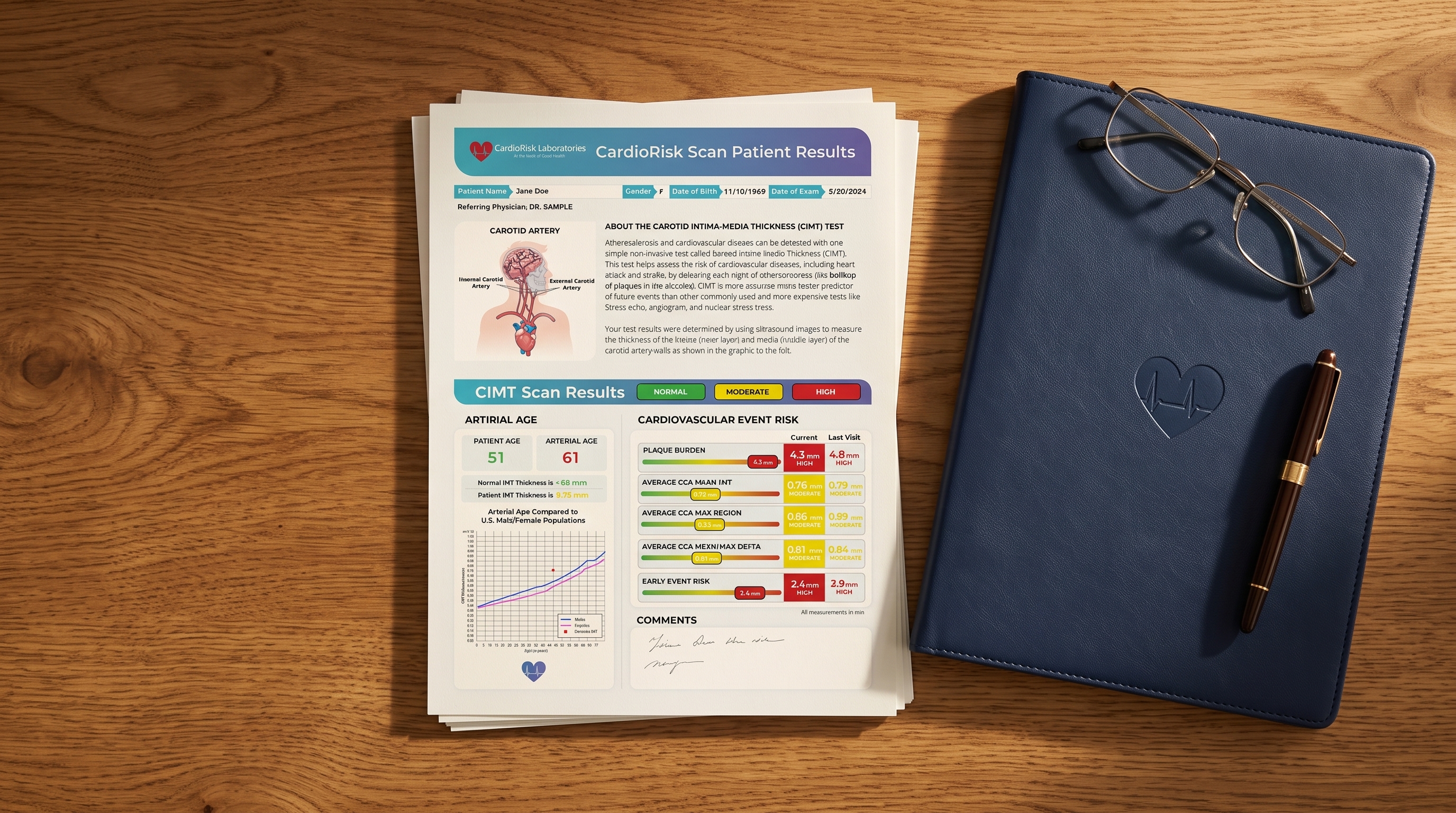
Not an estimate from a calculator — actual ultrasound images of your carotid walls with measured thickness.
How your arteries compare to others your age, so the number means something you can act on.
A clear written summary you can hand to your own doctor to guide next steps.
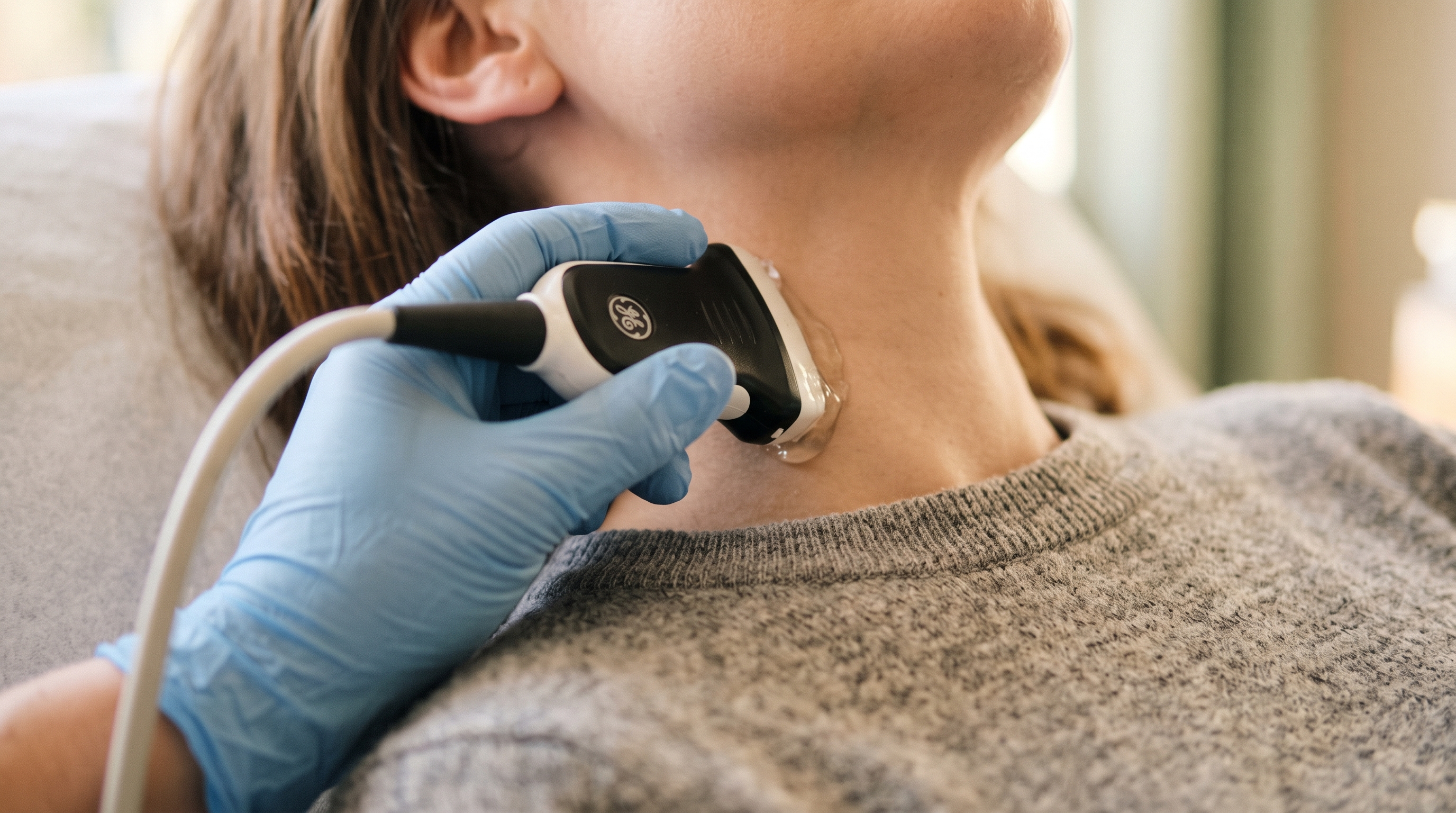
It's quick, comfortable, and needs no preparation. You stay fully clothed and seated the whole time.
Find a screening near you and pick a time — about two minutes, no referral.
A trained technician performs the 15-minute ultrasound. In and out in under half an hour.
A clear report with images, measurements, and your arterial-age comparison.
Walk through findings with a reviewer or your own physician and decide next steps together.
Your CIMT report turns a complex idea into a few clear, trackable numbers — always meant to be reviewed with a qualified provider.
The measured thickness of your carotid artery walls (intima-media thickness). Thickening is a recognized early marker of atherosclerosis.
How your measurement compares with others of the same age and sex — an easy way to see whether your arteries look younger or older than your years.
Whether the scan sees early plaque in the artery wall, and where — information you and your doctor can use to decide on next steps.
A CIMT scan is a risk-assessment tool, not a diagnosis. Your results should be reviewed with a qualified healthcare provider.
CIMT is often most useful for adults building a clearer picture of their cardiovascular risk. If any of these sound like you, it may be worth a conversation with your doctor.
A parent or sibling with heart attack, stroke, or early heart disease.
Your cholesterol looks fine, but you want to see what's actually happening in your arteries.
Roughly ages 40–70, when early changes are common but still very actionable.
High blood pressure, diabetes or prediabetes, or a history of smoking.

Todd Eldredge
President & CEO · Cardiovascular epidemiology

Dr. Amy Doneen, ARNP, DNP
Medical Consultant · BaleDoneen Method

Dr. Ford Brewer, MD, MPH
Medical Consultant - prevention medicine physician
Gel on your neck, a gentle wand, and you're done. CIMT uses the same safe ultrasound used during pregnancy — a technician glides a small probe along your neck for about 15 minutes. No needles, no dye, no radiation.
No referral is needed to book a screening. We do recommend sharing your report with your physician, and our review packages include time with a qualified provider.
The CIMT scan with a complimentary results review is $249; a package that adds a personalized clinician consultation is $497. Screenings are typically self-pay, and HSA/FSA funds may apply.
You receive a clear written report with your images, measurements, and arterial-age comparison, plus options to review the findings with a qualified professional.
Find your city, pick a time, and get a direct look at your cardiovascular health.
