A CIMT test is a 15-minute, non-invasive ultrasound — no needles, no radiation — that takes a direct look at your carotid artery walls, measuring their thickness and looking for early plaque that can appear before any symptom. It's a risk-assessment tool, not a diagnosis.
CIMT stands for carotid intima-media thickness. Using the same safe ultrasound technology used in pregnancy, a trained sonographer measures the inner two layers — the intima and media — of your carotid arteries, and looks for visible plaque. Thickening and plaque in these layers are recognized markers of atherosclerosis, the disease associated with most heart attacks and strokes.
Blood panels estimate your risk from numbers. A CIMT test takes a direct look at your artery walls — physical evidence, not a prediction.
A normal cholesterol panel can't tell you whether plaque is already forming. CIMT looks at the wall directly and may help identify early plaque changes before they create major blockage.
The same ultrasound used in prenatal imaging — no needles, no dye, no radiation. You stay fully clothed; only your neck is scanned.
Your report includes images, measurements, and an arterial-age comparison you can repeat over time to see change.
Not quite. Hospital carotid duplex screenings — and the kind offered by walk-in screening companies — generally look for significant blockages. A CIMT test measures wall thickness and looks for early plaque, which can appear before a blockage reaches that level. In other words, a duplex tends to flag disease that is already advanced; CIMT is designed to look for it earlier, while you and your doctor have the most options.
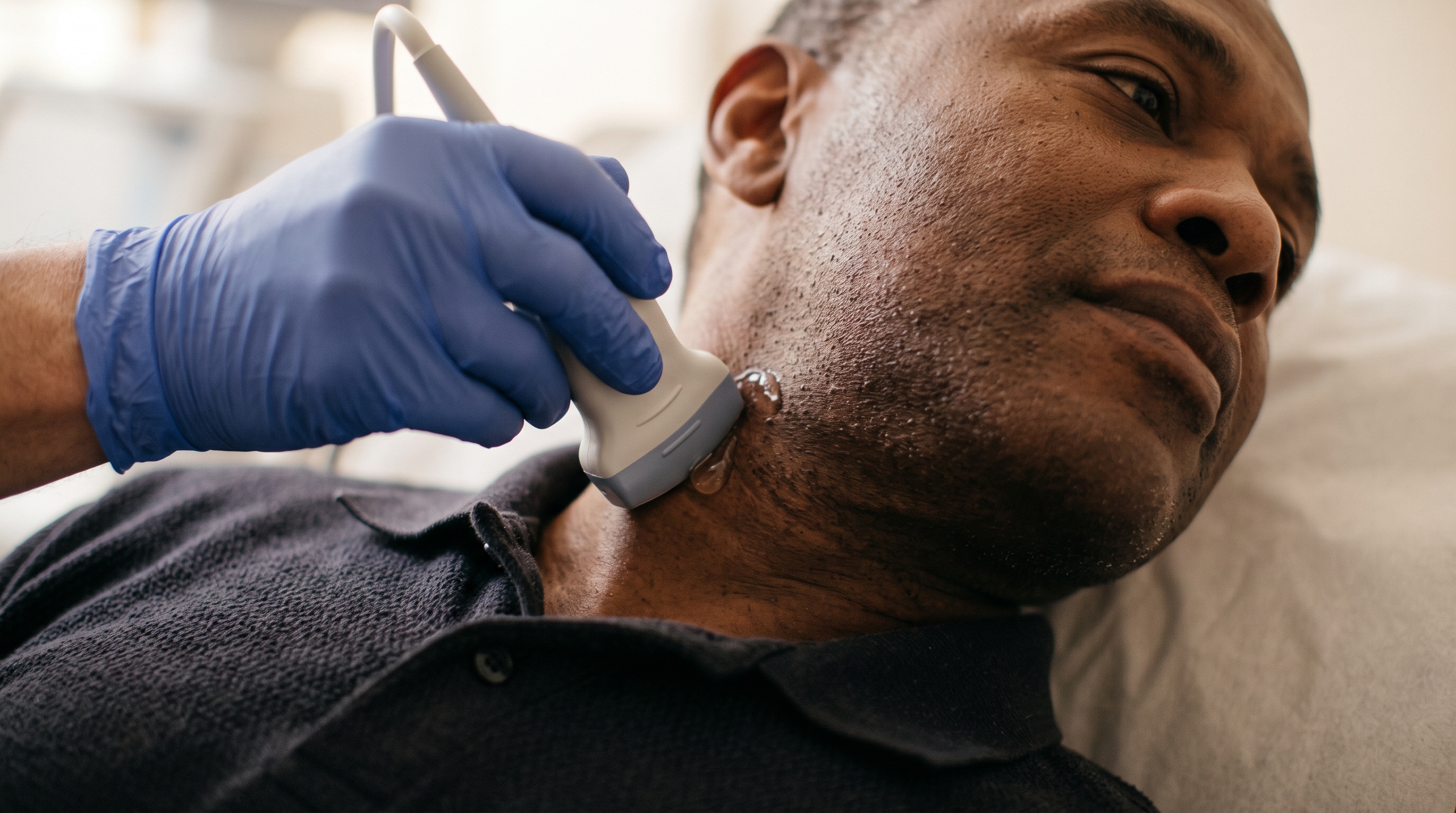
Arrive a few minutes early. No fasting, no prep — just wear something comfortable with an open neckline.
A trained technician glides a small ultrasound probe along each side of your neck. Painless and radiation-free.
You get a clear written report with images, measurements, and how your arteries compare to others your age.
It's recommended for adults 30 and older — and earlier for those at higher risk, including people with a family history of heart attack or stroke, people of Southeast Asian or African American descent, and anyone whose cholesterol looks “fine” but who wants a direct look at their artery walls rather than an estimate. No referral is needed.
CardioRisk Laboratories has performed CIMT screenings across the country, alongside physicians, dental practices, and preventive-health organizations.

Todd Eldredge
President & CEO · Cardiovascular epidemiology

Dr. Amy Doneen, ARNP, DNP
Medical Consultant · BaleDoneen Method

Dr. Ford Brewer, MD, MPH
Medical Consultant · Preventive medicine · PrevMed Health
A sample of upcoming CIMT screening dates — search the full directory to see every location.
CIMT is a recognized ultrasound measure of carotid artery wall thickness, an established marker of subclinical atherosclerosis. Like any screening tool, it's one data point — most useful alongside your medical history and other testing, not as a standalone diagnosis.
A CAC score uses a CT scan to measure calcified plaque in the heart's own arteries, with a small dose of radiation. CIMT uses ultrasound — no radiation — to measure wall thickness and plaque in the carotid arteries as a window into overall vascular health. Some patients use both as complementary information.
No. You can book a CIMT screening directly, without a physician referral. We recommend sharing your report with your doctor afterward.
Many patients rescan annually to track change over time, since your report includes a baseline you can compare against. Your physician can help you decide what cadence makes sense for your risk profile.
Your CIMT report is written to be physician-ready, with images, measurements, and an arterial-age comparison your doctor can review alongside your other records.
We hold CIMT screening events at locations across the country — find one near you and book in about two minutes.
